Zenbook 14 OLED 2024 Review: Real User Experience After 3 Months
I've been using the Zenbook 14 OLED 2024 as my daily driver for about three months now. I bought it to replace an aging laptop that struggled with photo editing and frequent travel, and I wanted a balance of display quality, portability, and battery life. What follows is a detailed, honest account of my experience — the things I loved, the annoyances that crept in, and the trade-offs you should know before buying one.
First impressions and why I picked this model
Right out of the box, the display is what sold me. The OLED panel on my unit is incredibly punchy: deep blacks, vivid colors and excellent contrast. The chassis felt solid in hand, the hinge has a reassuring stiff-but-smooth action, and I appreciated the subdued design — not flashy, but definitely premium. I chose the configuration with 16GB RAM and a 512GB SSD because I do moderate photo editing, browser multitasking, and occasional light video work. I also wanted decent battery life without carrying the charger everywhere.
Display and media experience
In my experience, the OLED is the Zenbook 14's headline feature. What I found was:
- Color and contrast: Colors are vibrant without looking oversaturated out of the box. Skin tones and subtle gradients look natural, and the inky blacks make HDR clips and streaming content feel more cinematic.
- Sharpness and text: Text is crisp for day-to-day tasks and reading long articles. I spend hours writing and reading, and the screen didn't cause noticeable eye strain compared to my older LCD laptop.
- Refresh rate: My unit comes with a 90Hz panel (some configurations vary). The smoother scrolling and window movements are a small but welcome quality-of-life improvement. I noticed the difference most when scrolling long web pages or navigating complex spreadsheets.
- Brightness: The panel is bright enough for indoor and shaded outdoor use, but I noticed it struggles under direct midday sun. If you plan to work a lot outdoors, you'll want to test the exact configuration before buying.
- Black crush and HDR: OLED's black levels are amazing for watching movies. HDR content looks noticeably better than on typical IPS panels, though not at the cinematic peak of high-end OLED TVs. For quick color-critical tasks, I calibrated the display and got consistent results for sRGB work.
One small annoyance: when running at higher refresh rate and higher brightness simultaneously, the battery drains noticeably faster. In my experience, leaving the panel at 60Hz for long stretches of writing or browsing extends battery life meaningfully.
Performance and daily tasks
After three months of mixed use, here's what I observed regarding performance:
- Everyday responsiveness: The laptop is snappy for web browsing, multiple Chrome windows, Slack, email, and light photo editing. Moving between apps feels instant and fluid.
- Photo editing and content creation: I edit RAW photos in Lightroom and run occasional exports. The Zenbook handles these tasks well for small-to-medium jobs. Exports and heavy adjustments are slower than a dedicated desktop workstation, but perfectly acceptable for mobile editing.
- Video work and heavier loads: When I pushed the CPU and integrated graphics for prolonged video exports, the laptop warmed up and the fans came on. Performance is good for short bursts, but sustained heavy workloads see thermal throttling and reduced clock speeds. If you do long, sustained rendering daily, a more thermally capable machine would be better.
- Thermals and noise: The cooling solution keeps things within safe temperatures, but I noticed the keyboard deck can get warm under long loads and the fans can be audible when exporting or running benchmarks. For general web and office tasks, the fans are quiet or idle most of the time.
Battery life and charging
Battery life is where expectations and real-world use diverge for me. In my experience:
- Typical mixed use: With email, document editing, light web browsing, and music, I typically saw between 7 and 9 hours on a charge. That’s with screen brightness around 40���60% and 90Hz enabled occasionally.
- Sustained productivity: Running a few editing apps, multiple browser tabs and messaging apps dropped the runtime to around 5–6 hours.
- Heavy use: Video exports and gaming brought battery life down to 2–3 hours, which is expected for tasks that push the CPU and GPU.
- Charging: The laptop supports USB-C Power Delivery and comes with a compact charger. I typically top up quickly during breaks — a 30–40 minute charge often gives a meaningful boost for another couple hours of light use.
One thing that bothered me early on was how much brightness and refresh rate affect battery life. Turning 90Hz off and reducing brightness returned several hours — a useful tip if you need all-day unplugged use.
Keyboard, touchpad, and input
I type a lot, so the keyboard matters. What I noticed:
Discover deals on Electronics — updated daily.
Browse Now →- Keys and travel: The keys have a pleasant, slightly firm feedback and decent travel for a thin laptop. My typing speed didn't drop after switching, and long sessions are comfortable. The keycaps are well-shaped and the backlight is evenly lit.
- Layout: The layout is compact but familiar. I had to get used to the smaller right-side Shift key for a day or two, but it's not a dealbreaker.
- Touchpad and NumberPad: The touchpad is smooth and accurate for gestures and multi-finger navigation. My model includes ASUS's NumberPad overlay — it's helpful sometimes for numeric entry, but I found palm detection isn't perfect. I occasionally triggered the NumberPad while typing, which was a small annoyance.
- Webcam and microphone: The webcam is serviceable for video calls in good light but struggles in low-light conditions. The microphone is clear for speech but picks up some keyboard noise at close range.
Ports, connectivity, and expandability
I use several peripherals, so ports mattered a lot to me. In my experience:
- Ports: The laptop offers a practical mix of ports that handled my everyday needs: USB-C for charging and data, at least one USB-A for legacy devices, HDMI for occasional external displays, and a microSD/SD slot on some SKUs (check the spec sheet for your region). I often used a single USB-C hub when traveling and appreciated that basic connectivity didn't require a big dock.
- Wireless: Wi‑Fi and Bluetooth have been rock-solid in my use. I didn't experience dropouts or pairing issues with my phone, mouse, or headphones.
- Storage: My 512GB SSD is fast enough for everyday file access and application loading. If you need more storage, check whether the model in your market allows an easy upgrade or choose a larger SSD at purchase.
Build quality and portability
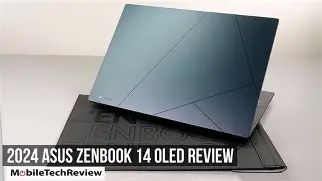
The Zenbook 14 OLED 2024 is light enough to carry daily and feels robust. I travel with it weekly and it fits comfortably in a smaller backpack. The hinge raises the keyboard slightly in one of the ErgoLift designs I tested, which makes typing more pleasant and improves airflow a bit. The finish resists fingerprints reasonably well, but it isn't as stealthy as some anodized aluminum finishes — you'll see smudges if you're picky.
Software and extras
The preinstalled software includes ASUS utilities for battery management, display calibration presets, and a few third-party apps. I appreciated the ASUS power profiles and the display modes (Vivid, sRGB, etc.). I did uninstall a couple of apps I didn't need, but nothing was intrusive enough to be a major issue.
Pros & Cons
- Pros
- OLED panel with deep blacks and excellent color for media and photo work
- Lightweight, premium-feeling chassis that’s travel-friendly
- Good everyday performance for productivity and light content creation
- Comfortable keyboard and accurate touchpad with useful NumberPad option
- Solid battery life in mixed-use scenarios
- Cons
- Thermals limit sustained heavy workloads; fans become audible under load
- Webcam is only adequate in good light — low-light performance is mediocre
- Battery drains faster with higher refresh rate and high brightness
- NumberPad on touchpad can be accidentally triggered
- Outdoor visibility in direct sun is limited compared to some high-nit LCDs
Comparison: Zenbook 14 OLED 2024 vs a few alternatives
| Zenbook 14 OLED (2024) | MacBook Air (M2) | Dell XPS 13 | |
|---|---|---|---|
| Display | OLED, deep blacks, vivid color, 90Hz (varies) | IPS/Liquid Retina, excellent color, tuned for macOS | IPS/optional OLED, bright, excellent for outdoor |
| Battery | 7–9 hours typical mixed use | Excellent—often 12+ hours with light use | Good—8–10 hours depending on configuration |
| Performance | Good for multitasking; thermal limits for long renders | Very efficient, strong single- and multi-core performance | Great balance; optional higher-power configs available |
| Ports | Balanced mix — USB-C, USB-A, HDMI on many SKUs | Mostly USB-C / Thunderbolt — adapters often needed | Similar to Zenbook depending on SKU |
| Portability | Very portable, light | Extremely portable, thin and light | Compact but slightly heavier |
| Best for | Users who want a great OLED screen in a portable Windows laptop | Users who want battery life and macOS ecosystem | Users who want a premium Windows ultrabook with flexible configs |
Buying guide: what to check before you buy
In my experience shopping and testing laptops, a few practical checks save a lot of frustration. If you're considering the Zenbook 14 OLED 2024, here's what I'd recommend:
1. Choose the right configuration for your workload
If you do light photo editing and everyday productivity, 16GB RAM and a mid-range CPU are sufficient. If you plan to do sustained video editing or heavy multitasking, consider a higher-performance SKU (and accept that thermals can limit long runs on thin ultrabooks).
2. Test the display in person if you can
OLED quality varies slightly between panels and companies sometimes ship different refresh rates depending on region and SKU. If display brightness in sunlight matters to you, test it in a store or read region-specific reviews.
3. Consider battery trade-offs
OLED and higher refresh rates look great but consume more power. If you absolutely need all-day battery without charging, you may want to choose a configuration tuned for longevity or lower the refresh rate and brightness.
4. Confirm ports and expandability
Make sure the SKU you buy includes the ports you need. Some regional models drop HDMI or card slots — check the spec sheet. If you're frequently connecting cameras, monitors, or Ethernet, plan for a small USB-C hub.
Looking for the best Electronics deals on Amazon?
See Deals →5. Pay attention to keyboard layout
If you type a lot, test the layout and backlight. Some compact laptops have smaller modifier keys or different key spacing that can affect comfort. Also test the NumberPad overlay if that’s a feature you expect to use often.
6. Check warranty and local service options
Travel and daily use can lead to wear or mishaps. Make sure the warranty and service options are suitable for where you live. I found it helpful to register the laptop early and understand the repair turnaround time in my region.
Final thoughts and recommendation
After three months with the Zenbook 14 OLED 2024, my overall impression is very positive. If you value an excellent OLED display in a light, well-built Windows laptop, this model delivers a lot of what you'd expect: gorgeous colors, comfortable typing, solid everyday performance, and respectable battery life for mixed-use days.
That said, the laptop isn't a perfect all-purpose machine. In my experience, sustained heavy workloads reveal thermal limits and audible fan behavior. The webcam is adequate for most calls but not exceptional in low light, and the NumberPad can be finicky if you rely on the touchpad for heavy typing. These are real trade-offs for a slim, portable design.
If your typical day is writing, web work, photo editing at a hobby level, streaming, and travel, the Zenbook 14 OLED 2024 is likely to be a very satisfying companion. If you need a machine for daily, heavy rendering or professional-grade video pipelines, I'd consider a more thermally capable laptop or a desktop for that workload.
In my experience, this laptop hits a sweet spot: it made everyday tasks more pleasant, elevated media and photo work with an outstanding screen, and kept travel light without too many compromises. For me, that balance was worth it — and after three months of use, it's become the laptop I reach for most days.