Should You Upgrade from Garmin Forerunner 970 to Dji Avata 360?
The electronics market is often defined by linear progression: a phone is replaced by a newer phone, and a laptop is succeeded by a more powerful laptop. However, as the boundaries of personal technology expand, consumers are increasingly finding themselves at a crossroads between vastly different categories of lifestyle tech. Today, we delve into an unconventional but surfacing comparison within the high-end electronics space: moving from the Garmin Forerunner 970, a peak-performance multisport smartwatch, to the DJI Avata 360, a theoretical leap into immersive, high-fidelity aerial exploration and spatial recording.
At first glance, comparing a wearable fitness tracker to a specialized unmanned aerial vehicle (UAV) seems like comparing a treadmill to a private jet. Yet, for the "prosumer" demographic—adventure athletes, tech enthusiasts, and content creators—these devices often compete for the same limited budget. Both represent the pinnacle of their respective fields, costing significant sums and demanding a commitment to mastering their specific ecosystems. This article analyzes whether the shift from the data-heavy wrist-bound experience of the Forerunner series to the visceral, first-person perspective (FPV) of DJI’s latest innovation represents a logical evolution for the modern tech buyer.
Understanding the Garmin Forerunner 970: The Athlete’s Command Center
The Garmin Forerunner 970 has long been considered the "Gold Standard" for serious triathletes and marathoners. Built on a legacy of precision, it isn't just a watch; it is a sophisticated data harvester. Its primary value proposition lies in its ability to quantify the human body's performance with clinical accuracy. For the user transitioning from this device, their primary interaction with technology has been internal—focusing on heart rate variability, VO2 max, training readiness, and recovery times.
The hardware of the Forerunner 970 is designed for endurance. With a battery life that can span weeks in smartwatch mode and dozens of hours in full multi-band GNSS tracking mode, it provides a sense of security and reliability. The display is optimized for high visibility in direct sunlight, reflecting its outdoor-first philosophy. Furthermore, the integration with the Garmin Connect ecosystem allows for deep longitudinal studies of one's own health. It is a tool of discipline, a silent partner in the pursuit of physical limits.
However, the Forerunner 970 is ultimately a passive observer. It records what you do. It does not create new experiences so much as it documents existing ones. For some users, the data-heavy nature of the Garmin ecosystem can lead to "quantified self" fatigue, where every jog is a metric to be managed rather than an experience to be enjoyed.
Analyzing the DJI Avata 360: A New Dimension of Experience
In contrast, the DJI Avata 360 represents a departure from the internal to the external. As part of DJI’s First-Person View (FPV) lineup, the Avata 360 is built to transport the user’s consciousness into the sky. It is an experiential device first and a recording device second. While the Garmin measures the breath, the DJI takes it away. The "360" designation implies an expansion into total spherical awareness, utilizing multiple sensors to ensure that the pilot—wearing immersive goggles—feels as though they are floating in space.
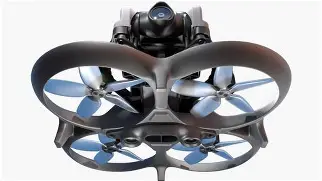
The DJI Avata 360 is characterized by its agility and its "cinewhoop" design, featuring integrated propeller guards that allow it to be flown in tight spaces, through forests, or even indoors without the catastrophic risks associated with traditional drones. It captures 4K video at high frame rates with RockSteady and HorizonSteady stabilization, making the resulting footage look like a professional Hollywood production. It is a tool of creativity and exploration, designed to capture the world from angles that were previously impossible for the average consumer.
Where the Garmin is about the "Self," the DJI is about the "Scene." The transition to this device suggests a shift in priorities from self-improvement and health metrics toward adventure photography, cinematic storytelling, and the sheer thrill of flight. It is a transition from a utility that sits on your wrist to a hobby that requires your full attention and a dedicated field of operation.
Find top-rated Electronics products at great prices.
View Offers →A Strategic Comparison: Wearable vs. Flyable
To understand if an upgrade—or more accurately, a pivot—is right for you, we must look at how these devices perform across the pillars of modern electronic utility: portability, data utility, and social value.
| Feature | Garmin Forerunner 970 | DJI Avata 360 |
|---|---|---|
| Primary Use Case | Multi-sport tracking & health monitoring | Immersive FPV flight & 360° videography |
| Portability | High (always on wrist) | Medium (needs carrying case) |
| Interaction | Passive (background tracking) | Active (manual flight required) |
| Battery Life | 2 weeks (smartwatch) / 40+ hours (GPS) | 18-23 minutes per flight battery |
| Data Output | Biometric logs, pace, maps | High-res 4K/360 video and photos |
| Learning Curve | Low (interface mastery) | High (flight skills required) |
Pros and Cons: Garmin Forerunner 970
- Pros:
- Incredible battery longevity that eliminates "range anxiety" for long-distance athletes.
- Comprehensive health suite including EKG, sleep coaching, and stress tracking.
- Rugged construction with sapphire glass and fiber-reinforced polymer.
- No additional fees or certifications needed to operate; purely plug-and-play.
- Seamless integration with third-party fitness apps like Strava and MyFitnessPal.
- Cons:
- Iterative updates can feel stale for those who aren't training for specific races.
- Screen technology (MIP) looks dull compared to modern OLED or VR displays.
- Data can feel overwhelming or discouraging during periods of inactivity.
Pros and Cons: DJI Avata 360
- Pros:
- Offers a transformative perspective on the environment through high-res VR goggles.
- Capable of capturing social-media-ready content that surpasses any smartphone or wearable.
- The "360" obstacle avoidance system makes it significantly safer for beginners than traditional FPV drones.
- Small footprint allows for travel and hiking-friendly transport.
- The Motion Controller makes flight intuitive, mimicking a flight stick rather than a complex remote.
- Cons:
- Highly restrictive in terms of where it can be used (FAA regulations, No-Fly Zones).
- Battery life is extremely short, necessitating multiple expensive spare batteries.
- Steep repair costs if the 360-degree sensor array is damaged in a high-speed crash.
The Performance Narrative: Real-World Use Cases
To determine the value of this "upgrade," consider three typical user profiles and how their life changes when switching from the Garmin ecosystem to the DJI ecosystem.
The Weekend Trail Runner
Currently, the trail runner uses the Garmin Forerunner 970 to track elevation gain and ensure they are staying within their aerobic heart rate zone. The tech is a coach. By "upgrading" to the DJI Avata 360, the runner changes their relationship with the trail. Instead of focusing on their own pace, they use the drone to scout the trail ahead or to film cinematic documentation of their run. The focus shifts from how fast they ran the ridge to how beautiful the ridge looks from two hundred feet in the air. For the runner who feels they have plateaued in training, the Avata 360 offers a way to re-engage with the outdoors through a creative lens.
The Tech Enthusiast
The tech enthusiast likely appreciates the Forerunner 970 for its engineering and the sheer amount of hardware packed into a small circular frame. However, the Forerunner is a "solved" technology; there are few surprises left in pulse oximetry. The DJI Avata 360, however, represents the "bleeding edge." It uses O4 transmission protocols for near-zero latency video and sophisticated algorithms to stitch 360-degree views. For a buyer who thrives on the "wow factor," the DJI is a much more stimulating piece of electronics. It provides a tactile, visceral feedback loop that a smartwatch simply cannot replicate.
The Family Documentarian
Many users keep a Garmin simply to track general health and long walks. For them, the Forerunner 970 is a safety net. Moving to a DJI Avata 360 turns family outings into production events. While the Garmin might record that you walked 5,000 steps at the beach, the Avata 360 captures the scale of the coastline, the movement of the waves, and a top-down view of the family picnic that looks like a frame from a travel documentary. The trade-off is convenience: the watch is always there, while the drone requires a conscious effort to deploy.
Buying Guide: Making the Choice
Choosing between staying with a premium wearable like the Forerunner 970 or jumping into the DJI Avata 360 ecosystem depends on asking yourself several critical questions about your lifestyle and your tolerance for technical friction.
Assess Your Environment
The Garmin Forerunner 970 works everywhere—from the basement gym to the deep wilderness. It is legally agnostic. The DJI Avata 360, however, is heavily dependent on your geography. If you live in a dense urban center like New York or London, flying a drone is legally complex and often prohibited. If you do not have easy access to wide-open spaces or scenic landscapes, the Avata 360 will spend most of its time in its case. Ensure your environment allows for the "upgrade" to be functional.
Discover deals on Electronics — updated daily.
Browse Now →Evaluate Engagement Levels
The Forerunner 970 requires almost zero effort once configured. You put it on, and it does the work. The DJI Avata 360 is a demanding hobby. It requires charging goggles, controllers, and batteries, keeping firmware updated, and maintaining a high level of situational awareness during operation. If you are looking for tech that simplifies your life, stay with Garmin. If you are looking for tech that consumes your focus in an rewarding, meditative way, choose the DJI.
Consider the "Utility vs. Joy" Ratio
Is your primary goal in buying electronics to improve your efficiency, or to increase your joy? The Forerunner 970 is a tool of efficiency; it helps you sleep better, train smarter, and manage your time. The DJI Avata 360 is a machine of joy. It provides a rush of adrenaline and a sense of wonder that few other consumer electronics can match. Most buyers find that they eventually need both, but if forced to choose one, you must decide which side of that ratio you currently value more.
Integration and Ecosystem Longevity
One often overlooked aspect of this comparison is how these devices age. The Garmin Forerunner 970 is built for a 3 to 5-year lifecycle. Because its primary function is data collection, it remains useful even as newer models emerge. As long as the battery holds a charge, the heart rate data it collects today will be relevant five years from now.

The DJI Avata 360 exists in a faster-moving category. Drone technology, particularly in camera sensors and transmission stability, moves rapidly. Furthermore, the physical risks are higher; a single gust of wind or an unforeseen branch can end the life of the drone instantly. From a financial perspective, the Garmin is an investment in a lifestyle, while the DJI is an investment in an experience. You should expect the DJI to have a higher "total cost of ownership" when factoring in accessories and potential repairs.
Natural Conclusion
The decision to "upgrade" from a Garmin Forerunner 970 to a DJI Avata 360 is ultimately a decision to change how you interact with the world around you. If you are currently feeling trapped by numbers—constantly checking your pace, your calories, and your sleep score—moving to the DJI Avata 360 can be a liberating experience. It replaces the inward-looking metrics of the athlete with the outward-looking perspective of the explorer. It trades the security of a long-lasting wearable for the adrenaline of a short, spectacular flight.
However, for the individual whose identity is tied to physical performance and daily discipline, the Garmin remain an essential piece of equipment. The Forerunner 970 is a quiet guardian of health that supports your goals without demanding your attention. The DJI Avata 360 is not a replacement for that utility; it is a supplementary gateway to a different kind of adventure. For many, the ultimate setup isn't choosing between the two, but recognizing that the Garmin tracks the journey while the DJI captures the destination. If you find yourself more excited about the footage you could take than the miles you could run, the time to make the switch to the skies has arrived.