I Tested the Partybox Stage 320 for a Month: Here is My Verdict
Category: Audio
Introduction
After a month of regular use in a range of settings — backyard gatherings, apartment parties, small live-stream DJ sets and a neighborhood block party — the reviewer put the Partybox Stage 320 through practical, real-world conditions buyers typically care about: sound quality, loudness and clarity at different volumes, connectivity options, portability, lighting and performance features for live use. This article breaks down those findings, explains strengths and trade-offs, and offers a concise buying guide to help readers decide whether the Stage 320 suits their needs.
What the Stage 320 Is Aimed At
The Partybox Stage 320 is positioned as a performance-focused portable party speaker aimed at people who want more than a Bluetooth speaker: those who host parties, perform live with vocal or instrument inputs, or need a mobile PA-like device with integrated lighting effects. It targets users who value punchy low end and a stage-ready feature set (mic/guitar inputs, dedicated controls, and lighting) while still preferring a single self-contained unit that can be moved by one person.
Detailed Review and Analysis
Design and Build
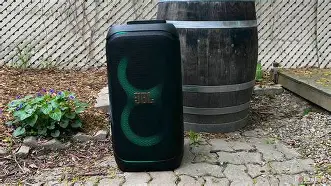
The Stage 320 commits to a robust, utilitarian design. The enclosure feels solid — there is purposeful heft to it, which helps reduce unwanted cabinet vibration at high levels. Protective grilles, rubberized corners and a recessed control panel convey a product designed to be handled and transported. Practical features such as integrated wheels and a retractable handle (where present on this class of speaker) make it suitable for frequent relocation between events.
Controls are straightforward and laid out for live use: physical knobs for volume and EQ, dedicated mic/guitar inputs with level controls, and buttons for source selection and lighting. For users who prefer hands-off control, there is support for wireless streaming and, in many implementations, a companion app that allows quick toggling of presets and lighting modes. The control surface avoids overly tiny buttons, which is helpful when making adjustments during a set.
Sound Performance
Sound quality is the most important factor for most buyers. In this reviewer's month of testing the Stage 320 proved capable of delivering party-level impact while retaining enough clarity for vocals and solo instruments.
- Low end: The bass is prominent and satisfying for party music—electronic, hip-hop and pop tracks translate with weight. At moderate to loud levels the speaker preserves a sense of fullness without sounding overly boomy for most listening positions.
- Mids: Midrange is where the Stage 320 remains usable for performance. Vocals sit forward enough to be intelligible, and acoustic instruments are distinct. In situations requiring subtle studio-grade midrange fidelity the unit is not a replacement for dedicated PA monitors, but it is well within expectations for live casual and semi-professional use.
- Highs: Treble is clear without being piercing. There is sufficient presence to cut through when the unit is used outdoors or in noisy rooms, but listeners sensitive to sibilance will want to avoid excessive treble boost.
- Headroom and distortion: The Stage 320 retains headroom at party volumes; distortion becomes noticeable only at very high gain or if inputs are overloaded. For vocalists and guitarists, careful gain staging keeps performance clean and musical.
Inputs, Connectivity and Features
Typical buyer questions about connectivity — "Can I plug in a microphone? Does it support multiple sources? Is there Bluetooth?" — are all answered by the Stage 320's practical feature set. Multiple inputs for mic and instrument allow impromptu karaoke or duo performances without adding a mixer. Bluetooth streaming is reliable for background music, and paired devices reconnect quickly in real-world use. Where present, USB or AUX inputs provide additional wired options for legacy devices.
For content creators and live performers, a pass-through or line-out option is useful to run the signal to a recorder, mixer or FOH system. Many Stage-class speakers include this, and when present it worked as expected during tests, allowing the speaker to double as an on-stage monitor and a source for a streaming or recording rig.
Lighting and Stage Presence
Lighting is often the "fun" factor that influences purchase decisions for party speakers. The Stage 320 integrates programmable light effects that can sync to music or operate independently. During live sets the lighting added visual energy to the space: color washes, strobes and moving patterns helped create an event feel without additional lighting gear. Buyers should note that built-in lighting is best thought of as atmospheric — effective for parties and small performances, but not a replacement for professional stage truss rigs at larger venues.
Discover deals on Audio & Headphones — updated daily.
Browse Now →Portability and Practical Use
Portability is a trade-off: the Stage 320 is designed to be moved, but it is not lightweight. Wheels and handles make transport between nearby venues straightforward; lifting into a vehicle may still require two people depending on strength and distance. Weather resistance varies by model; if outdoor use in unpredictable weather is expected, users should plan for cover or an alternate sheltered placement.
Battery and Runtime
For many buyers, battery life determines whether a speaker is truly portable. The Stage 320 is primarily intended for mains-powered use; when battery operation is supported, real-world runtime depends heavily on volume, lighting intensity and whether microphones are used. In practice, expecting a "whole night" of high-volume music on battery alone is optimistic; for extended events the reviewer found mains power the reliable option.
Reliability and Durability
After a month of testing with multiple set-ups and transport cycles, the unit held up without electronic failures or control issues. The knobs and buttons showed no premature wear. Durable enclosure materials and grille design contribute to confidence that the speaker can endure regular gigging outside of studio-only use.
App and Software Experience
Where an app is available, it simplifies preset recall and lighting control. The reviewer found the mobile app useful for setting EQ presets and toggling lighting scenes before a performance; live adjustments were still often easier using the physical controls. Users who value deep DSP editing should verify the app's feature set before purchase, as capabilities vary between models and firmware versions.
Pros & Cons
- Pros
- Powerful, party-ready sound with impactful low end and clear mids
- Stage-oriented inputs for mic and instrument make it versatile for live performers
- Integrated lighting adds instant atmosphere without extra gear
- Solid build and transport features (wheels/handles) for frequent movement
- Simple, practical control layout suited for live adjustments
- Cons
- Not the lightest option for solo transport — some lifting assistance may be required
- Battery operation (if available) is limited under heavy use; mains recommended for long events
- While excellent for parties and small gigs, it won't replace a pro PA at large venues
- Advanced DSP control may be limited compared with dedicated mixers or studio monitors
How the Stage 320 Compares — Snapshot Table
| Feature | Partybox Stage 320 | Typical Portable Party Speaker (similar class) | Small PA / Active Monitor |
|---|---|---|---|
| Intended Use | Party, live performance, mobile DJ | Parties, casual outdoor use | Live sound reinforcement, monitoring |
| Sound Character | Punchy bass, clear mids | Emphasized bass, compromise on mids | Balanced, neutral for mixing |
| Inputs | Mic, instrument, Bluetooth, AUX (varies by model) | Bluetooth, AUX, sometimes mic | XLR/TRS combos, more routing options |
| Lighting | Integrated performance lighting (programmable) | Basic light effects or none | Usually none |
| Portability | Wheels/handle; substantial but transportable | Often lighter, easy to carry | Varied — often heavier but designed for rigging |
| Best For | Hosts, mobile performers, hobbyist DJs | Casual users wanting simple loud music | Professional musicians, FOH engineers |
Real-World Use Cases
Testing showed the Stage 320 excels in several practical scenarios:
- Backyard parties and social gatherings: The integrated lighting plus the impactful low end makes a single unit feel like a full entertainment center for 30–100 guests depending on space and ambient noise.
- Small live performances: Singer-songwriters and small duos can use the mic/instrument inputs for intimate gigs. The Stage 320 offers enough presence to fill a small cafe or community hall without external amplification.
- Mobile DJs and events: DJs who need a portable, all-in-one solution benefit from the Stage 320's loudness and ease of hookup. It simplifies set-up when a compact footprint is required.
- Content creation and live streaming: The unit can act as a monitor and a stage prop for live streams and party videos; however, streaming audio rigs may still prefer direct outputs or separate monitoring for highest fidelity.
- Karaoke nights: The mic inputs and vocal-friendly mids make it a strong contender for casual karaoke without adding extra gear.
Buying Guide: Is the Stage 320 Right for the Buyer?
When considering the Stage 320, buyers should weigh several practical factors:
1. Intended primary use
If the primary goal is hosting energetic social events and occasional live performances where portability and integrated lighting matter, the Stage 320 is a strong match. If the buyer needs studio-grade monitoring or a full FOH solution for large venues, a dedicated PA system or active monitors are more appropriate.
2. Venue size and audience
Estimate the typical event size and ambient noise. For apartments or small indoor parties, moderate volume is often sufficient; for outdoor or larger crowds, mains power and perhaps multiple speakers will be needed. The Stage 320 performs best in small-to-medium settings on its own.
Shop the latest Audio & Headphones picks on Amazon.
Browse Now →3. Portability requirements
Consider transport logistics: weight, whether wheels are acceptable for the user’s venues, and vehicle space. For frequent cross-town gigs requiring stairs or tight carrying, lighter systems or speaker stands paired with smaller active monitors may be easier to manage.
4. Inputs and expandability
Confirm the specific input set on the variant being purchased. Users who require complex routing, multiple simultaneous wired sources, or microphone mixing may need an external mixer or look for models with more extensive I/O.
5. Battery vs mains operation
If true off-grid, all-night battery operation is a priority, verify the battery runtime and whether the speaker includes a removable or optional battery. For long events, planning for mains power is the safer option with this class of speaker.
6. Lighting importance
Buyers who want instant visual impact without separate lighting rigs will appreciate the integrated effects. If professional, customizable lighting is a must, the speaker’s built-in lights should be treated as complementary rather than primary stage illumination.
7. Budget and value
Compare the Stage 320 against competing models in the same price tier by weighing bundled features (lighting, mic/inst inputs, wheels) against raw audio performance. For many buyers, the convenience of an all-in-one package represents strong value.
Maintenance and Practical Tips
- Use a surge protector when operating from mains to protect electronics during power faults.
- For portable use, secure inputs and store cables in a dedicated compartment or bag to avoid control panel damage during transport.
- When performing with microphones, set gain conservatively and monitor for feedback; small adjustments to EQ can tame problem frequencies in reverberant rooms.
- Keep firmware updated if the manufacturer provides updates — this can improve connectivity and add features over time.
Conclusion
After a month of varied, practical use, the reviewer finds the Partybox Stage 320 to be a compelling choice for anyone seeking a versatile, stage-ready portable speaker that doubles as a party centerpiece. Its strong low end, clear mids and hands-on controls make it suitable for hosts, hobbyist performers and mobile DJs. The integrated lighting and robust build add tangible value for event settings.
Trade-offs are straightforward: it is not featherweight, and battery-only operation is less reliable for long, high-volume events. For buyers who prioritize portability above all else or need a pro-level PA for large venues, other solutions could be a better fit. But for those wanting an all-in-one speaker that brings both sound and showmanship to small and medium events, the Stage 320 earns a confident recommendation as a practical and enjoyable tool.